
Living with chronic knee pain can slowly affect every aspect of daily life. Activities that once felt effortless walking to the market, climbing stairs, standing during work, or enjoying a morning walk can become increasingly difficult. While many people try to manage the discomfort with painkillers or home remedies, there comes a stage when consulting a Knee Replacement Surgeon becomes the most sensible step toward restoring mobility and improving quality of life.
One common misconception is that knee replacement surgery should only be considered when a person can barely walk. In reality, orthopedic specialists recommend evaluation much earlier, especially when conservative treatments are no longer providing lasting relief. Early consultation allows patients to understand all available options before their condition becomes more severe.
Understanding Why Knee Damage Occurs
The knee is one of the body's largest and most frequently used joints. Years of movement, injuries, excess body weight, or medical conditions can gradually wear down the cartilage that cushions the joint.
Some of the most common causes of severe knee damage include:
- Osteoarthritis
- Rheumatoid arthritis
- Previous knee injuries
- Sports-related trauma
- Joint deformities
- Age-related cartilage degeneration
- Untreated ligament injuries
As cartilage deteriorates, the bones begin rubbing against one another, resulting in pain, swelling, stiffness, and reduced movement.
Signs That Should Not Be Ignored
Many patients continue living with knee pain for years without realizing that specialist treatment could significantly improve their mobility.
You should consider consulting a knee replacement surgeon if you experience:
- Persistent knee pain lasting several months
- Difficulty climbing or descending stairs
- Swelling that repeatedly returns
- Knee stiffness after resting
- Pain even while sitting or sleeping
- Limited ability to walk comfortably
- Dependence on pain medications for routine activities
- Noticeable bowing or deformity of the knee
These symptoms do not automatically mean surgery is required, but they do indicate that a detailed orthopedic evaluation is necessary.
Surgery Is Not Always the First Recommendation
A qualified orthopedic surgeon does not recommend surgery for every patient. Instead, treatment usually begins with conservative options whenever appropriate.
These may include:
- Physiotherapy
- Anti-inflammatory medications
- Weight management
- Activity modification
- Knee strengthening exercises
- Support braces
- Joint injections
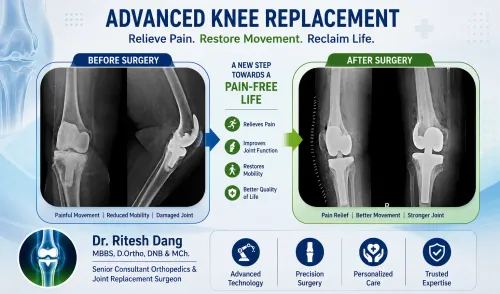
Only when these treatments fail to provide meaningful improvement and imaging confirms advanced joint damage does knee replacement become a suitable option.
What Happens During the Evaluation?
Before recommending surgery, an orthopedic specialist performs a comprehensive assessment to understand the condition of the knee.
The evaluation generally includes:
- A detailed discussion about symptoms.
- Physical examination of joint movement.
- Assessment of walking pattern and stability.
- X-rays or other imaging studies.
- Review of previous treatments.
- Evaluation of overall health and medical history.
This process helps ensure that treatment decisions are based on the patient's individual needs rather than symptoms alone.
Preparing for Knee Replacement Surgery
Patients who understand the procedure beforehand often recover with greater confidence.
Preparation may involve:
- Managing existing medical conditions
- Improving muscle strength through physiotherapy
- Maintaining a healthy diet
- Learning post-operative exercises
- Planning temporary support at home during recovery
- Discussing realistic recovery expectations with the surgeon
Good preparation can make rehabilitation smoother and reduce anxiety before surgery.
Recovery Requires Commitment
Successful knee replacement is not determined only by the operation itself. Recovery depends equally on rehabilitation and patient participation.
Most recovery programs include:
- Early supervised walking
- Gradual increase in joint movement
- Strength-building exercises
- Balance and coordination training
- Regular follow-up appointments
- Lifestyle adjustments to protect the new joint
Patients who consistently follow rehabilitation advice often experience better mobility and long-term function.
Choosing the Right Specialist Matters
When searching for a knee replacement surgeon, patients should look beyond convenience alone.
Important factors include:
- Experience in treating knee arthritis
- Personalized treatment planning
- Availability of modern surgical techniques
- Transparent communication
- Comprehensive rehabilitation support
- Continued post-operative follow-up
Choosing a specialist who focuses on long-term outcomes rather than simply performing surgery can significantly influence recovery.
Orthopedic Care for Patients in Rani Bagh
Residents of Rani Bagh, Delhi, who experience persistent knee pain often benefit from early orthopedic consultation instead of waiting until movement becomes severely restricted. Timely diagnosis can help determine whether non-surgical management is sufficient or if knee replacement should be considered.
Anand Ortho Care Centre- Dr. Ritesh Dang provides comprehensive evaluation for patients with arthritis, chronic knee pain, and advanced joint degeneration. Through jointspecialistdelhi.com, patients can understand different treatment options, learn about modern surgical techniques, and make informed decisions based on their individual condition.
Consulting a Knee Replacement Surgeon does not necessarily mean surgery is inevitable. Instead, it provides clarity about your joint health and helps identify the most effective path toward reducing pain, improving mobility, and maintaining an active lifestyle for years to come.
Keywords