Infection involving a knee implant is a serious complication that requires specialist medical assessment. It can develop relatively soon after an operation or appear much later. Because symptoms vary considerably, suspected infection should not be diagnosed or managed based on internet information alone.
Patients researching Infected Knee Replacement Surgery in Shalimar Bagh often want to know what happens after infection is suspected and why treatment can be more complicated than routine orthopedic care.
What Can Raise Concern About Infection?
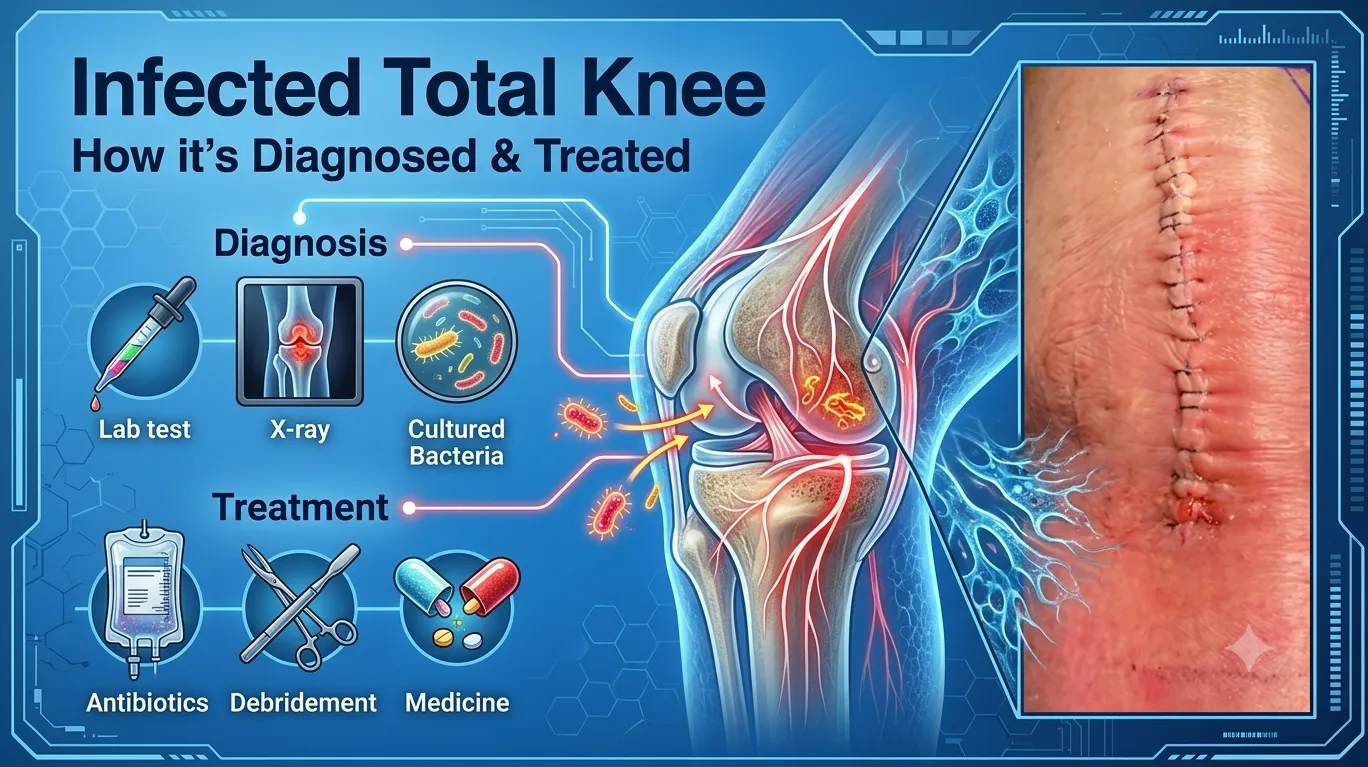
Possible signs may include increasing pain, swelling, warmth, redness, wound drainage, or deterioration in the function of a previously replaced knee. Some patients may experience systemic symptoms, while others may have less obvious manifestations.
Importantly, pain after a replacement does not always indicate infection.
Mechanical problems and other conditions can produce overlapping symptoms, which is why proper diagnostic evaluation is essential.
If there is wound drainage, significant redness, fever, rapidly increasing pain, or a sudden deterioration after surgery, prompt medical assessment is important.
How Is the Cause Investigated?
The evaluation begins with medical history and physical examination.
The orthopedic team may want to know:
- When the original operation was performed
- When symptoms started
- Whether wound problems occurred
- Whether antibiotics have recently been taken
- Whether other infections or medical conditions are present
- Whether additional procedures have been performed on the joint
Blood investigations, imaging, and analysis of joint fluid may be considered depending on the clinical situation.
No single symptom should be used by a patient to confirm or exclude infection independently.
Why Treatment Is Individualized
Management depends on several factors, including when the infection developed, the condition of the implants and surrounding tissues, the suspected organism, bone quality, previous operations, and the patient's overall health.
Some clinical situations may allow an approach intended to retain components while thoroughly addressing the infected area. Other circumstances can require removal of implant components and a more extensive reconstruction strategy.
Antimicrobial treatment may also form an important part of care under appropriate medical guidance.
Because these decisions are highly individualized, treatment cannot responsibly be selected from a general online checklist.
Why Specialist Planning Matters
An infected implant involves more than treating pain. The surgical team must consider infection control, implant stability, bone and soft-tissue condition, reconstruction requirements, and the patient's medical fitness.
Previous operative records and implant details can be particularly useful.
Patients should bring any available:
- Operative notes
- Discharge summaries
- Implant records
- Laboratory reports
- Culture reports
- X-rays and scans
- Details of antibiotic treatment
These records may help build a clearer clinical timeline.
Important Questions for the Consultation
A patient facing possible surgery should understand what the medical team believes is happening.
Useful questions include:
- What findings suggest infection?
- Are additional tests needed?
- What treatment approaches are being considered?
- Will existing components need to be removed?
- How will infection management be coordinated?
- What are the important risks?
- What could the treatment timeline involve?
- What rehabilitation may be needed?
The answers will depend on the individual clinical findings.
Do Not Delay Concerning Symptoms
A painful replaced knee should be evaluated rather than repeatedly treated without understanding the cause. This becomes particularly important when pain is accompanied by wound changes, swelling, drainage, fever, or rapidly worsening function.
Patients in Shalimar Bagh can seek specialist assessment at Anand Ortho Care Centre- Dr. Ritesh Dang for concerns involving a previously replaced knee.
When infection is suspected, the priority is accurate diagnosis and timely, coordinated medical care. Treatment may be complex, but a structured evaluation helps establish the extent of the problem and the most appropriate next steps.
Online information can help patients understand the process, but suspected implant infection requires direct assessment by qualified healthcare professionals.
Keywords