Knee replacement has evolved considerably in its planning, instrumentation, implant options, anesthesia protocols, pain management, and postoperative rehabilitation. For patients researching Advanced Knee Replacement Surgery in Rani Bagh, the most important point is that advanced should describe a thoughtful treatment process rather than simply a piece of equipment.
Modern technology can support surgery, but appropriate patient selection and careful clinical planning remain fundamental.
The Process Starts Before the Operating Room
The first question is whether replacement is appropriate at all.
Knee pain can arise from multiple conditions, and not everyone with arthritis on an X-ray requires an operation. A surgeon considers symptoms, physical examination, joint damage, mobility limitations, previous treatment, overall health, and patient expectations.
Surgery may become relevant when substantial joint disease causes persistent pain and functional limitation despite appropriate conservative management.
Preoperative Planning Matters
Planning may involve studying alignment, bone anatomy, deformity, range of movement, and other individual factors.
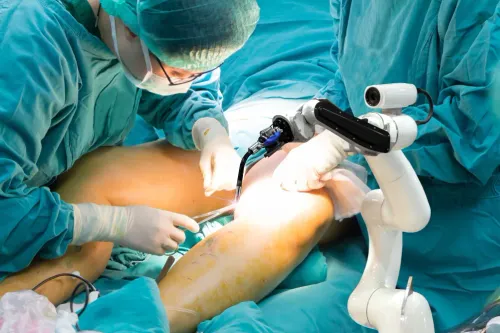
Depending on the surgical approach and technology available, digital planning or computer-assisted systems may provide additional information to support decisions about component positioning and bone preparation.
Patients should remember that sophisticated planning tools do not remove the need for surgical judgement.
Implant Decisions Are Individual
There is no single implant that is automatically ideal for every patient.
Selection can depend on anatomy, bone quality, ligament condition, deformity, surgical requirements, and other clinical considerations. The treating surgeon can explain why a particular implant design or technique is being considered.
Patients should be cautious about choosing surgery solely because of a brand name, marketing term, or technology advertised online.
Pain Management and Early Rehabilitation
Modern perioperative care often places considerable emphasis on controlling pain and helping patients begin appropriate movement after surgery.
The exact protocol varies according to the patient's health, surgical factors, anesthesia plan, and institutional practices.
Rehabilitation generally focuses on gradually restoring movement, strength, walking ability, and functional independence.
Progress is not identical for every patient. Comparing recovery day by day with another person can create unrealistic expectations.
What Should Patients Evaluate?
When considering surgery, look beyond claims about technology.
Important factors include:
- Clear diagnosis
- Appropriate indication for surgery
- Surgeon experience
- Individualized planning
- Medical optimization
- Infection-prevention protocols
- Rehabilitation planning
- Follow-up arrangements
- Clear discussion of risks and expectations
Patients with diabetes, cardiovascular conditions, obesity, anemia, or other health issues may require additional assessment before elective surgery.
Avoid Common Decision-Making Mistakes
One mistake is waiting for technology to guarantee an outcome. No surgical system eliminates all risks.
Another is assuming newer automatically means appropriate for every patient.
A third is focusing entirely on the operation while overlooking rehabilitation. Recovery requires participation from the patient as well as coordinated care from the medical team.
Questions That Clarify the Treatment Plan
Before deciding, ask why surgery is recommended, what alternatives remain, what technique is planned, which risks are particularly relevant, and what the expected rehabilitation pathway involves.
Also ask what preparations you can make beforehand. Improving general health, following medication instructions, completing recommended investigations, and preparing the home environment may all form part of preoperative planning.
Patients in Rani Bagh considering surgical treatment for substantial knee arthritis can seek evaluation at Anand Ortho Care Centre- Dr. Ritesh Dang.
Modern knee replacement combines established orthopedic principles with evolving planning tools, surgical techniques, and recovery protocols. The value of these advances is greatest when they are applied to the right patient for the right reason.
The goal of an informed consultation is therefore not to find the most technologically impressive description. It is to understand the diagnosis, the proposed treatment, the available options, and the complete pathway from preparation through rehabilitation.
Keywords