Recovery after knee surgery begins with safe movement, not unrestricted activity, and progress is measured in months rather than days. You will learn what to expect from the first hospital exercises through independent walking, how to organise your home, and which symptoms require prompt medical advice.
Key takeaways
- Begin ankle pumps, quadriceps tightening and assisted walking on the first day.
- Keep the wound clean and dry, and follow your discharge medication instructions.
- Use a walker until you can walk safely without pain or loss of balance.
- Ask your surgeon before driving, kneeling, strenuous exercise or returning to work.
What should you expect during the first day, week and year after surgery?
The first 24 hours after Knee Joint Replacement usually include ankle pumps, quadriceps tightening, bed-to-chair transfers, assisted standing and short walks with a physiotherapist. Early movement reduces immobility-related problems, but it does not mean the implant or healing tissues are ready for unrestricted activity.
During week one, expect a walker, help with toilet transfers, basic washing and frequent prescribed exercises. Your team will track knee straightening toward 0°, functional bending, rising from a chair, safe walking and stair technique.
Use this checklist to judge progress rather than a calendar alone:
- Weeks 2–6: move from a walker to a cane only when gait is safe, balance is steady and quadriceps control prevents the knee from buckling. Knee bending, straightening, household walking and stair confidence should gradually improve.
- Months 3–6: strength, endurance and balance continue developing after basic activities return. Improvement can continue through 12 months.
- At each review: record extension, functional flexion, standing from a chair without unsafe pushing, walking safely on level ground and managing stairs with the recommended technique.
Knee Replacement Recovery differs between patients. Keeping a walker longer is not failure, while abandoning it early can create a limp and increase falls. Pain, swelling and medical conditions can slow progress, so follow the physiotherapist’s plan and report stalled movement or declining function to the surgical team.
How does rehabilitation restore movement and strength?
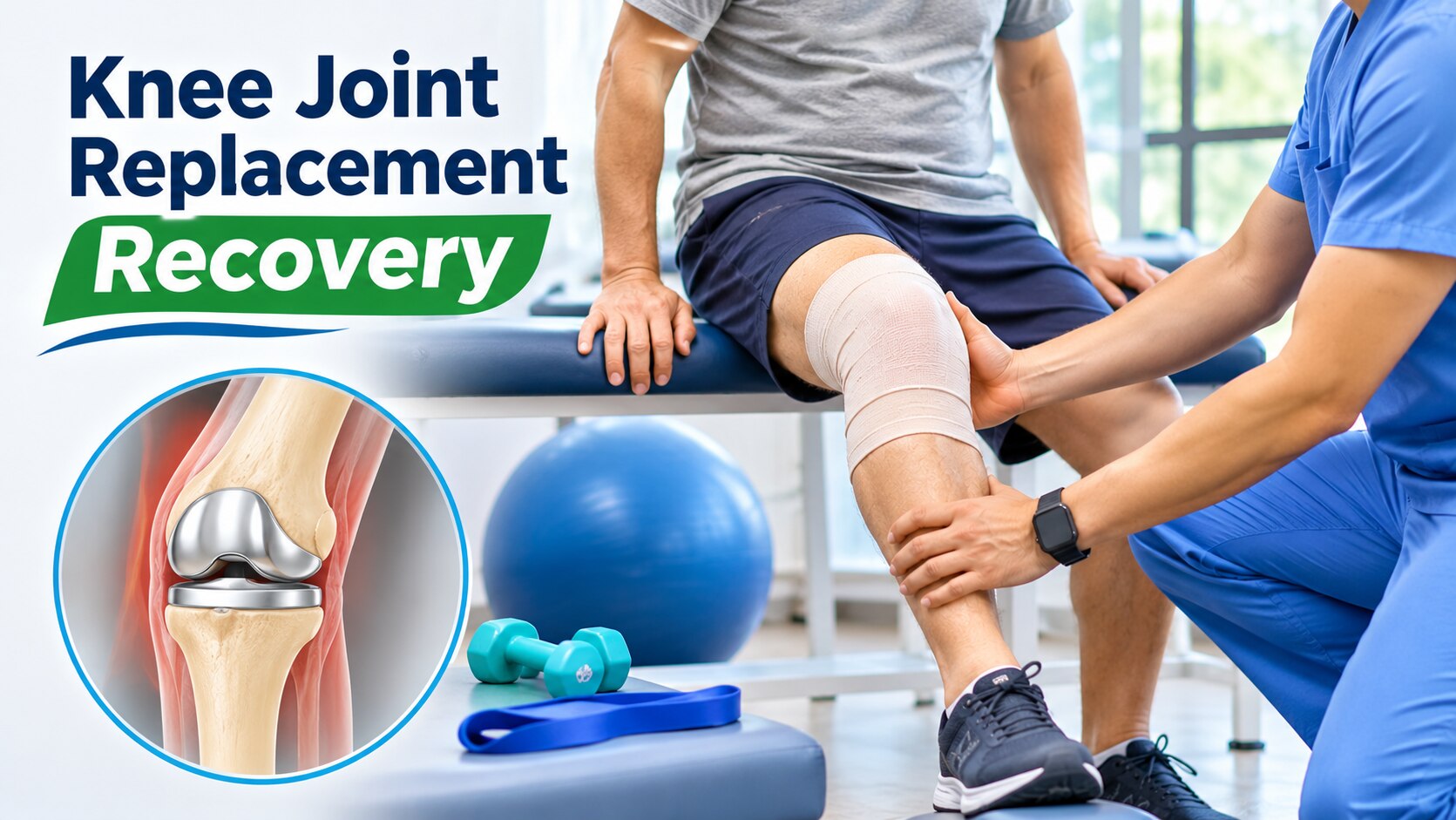
Knee Rehabilitation combines therapist-led assessment with short, prescribed practice at home; home exercises do not replace supervised physiotherapy. Your therapist checks gait, swelling, knee range of motion, bed-to-chair transfers, stair technique and quadriceps control, then increases strengthening only when movement and loading are safe.
Full extension is an early priority alongside flexion. A knee that bends well but remains partly bent can still produce a limp and disrupt walking. Your programme may include:
- Ankle pumps to maintain lower-leg movement
- Quadriceps tightening to restore muscle activation
- Heel slides for controlled flexion
- Supported extension work to improve straightening
- Straight-leg raises when you can control the knee without it dropping
- Balance, walking and stair practice as strength and control improve
Perform the prescribed short sessions at the recommended frequency, then allow pain and swelling to settle. Forcing the knee or repeatedly exercising into marked swelling can slow Knee Replacement Recovery. Pain that fluctuates after increased activity does not automatically mean implant failure, but severe pain that prevents exercise needs treatment.
If motion stops improving, contact the operating surgeon promptly instead of exercising harder. Swelling, pain inhibition, scar tissue, infection or a mechanical problem can cause stiffness, and some cases require a different intervention. Pain control, ice, elevation and graded activity help you participate safely.
How should you manage pain, the wound and safety at home after discharge?
Arrange your first-week setup before discharge: travel home with enough legroom, and have a responsible adult available to help. Place a raised toilet or toilet frame, firm chair with arms, clear walking routes, night lighting and commonly used items within reach.
1. Follow the surgical team’s dressing and wound instructions exactly, including when bathing is permitted. Do not soak an unhealed incision in a bath, pool or hot tub; prolonged water exposure can soften the wound and allow contamination.
2. Take prescribed pain medicines on the instructed schedule. Use an ice pack wrapped in cloth, elevate the leg, and increase walking and exercises gradually. Do not start aspirin or another anticoagulant without medical instructions. After elective Knee Joint Replacement, clot-prevention medication can last 14 days when indicated, alongside movement, under the surgeon’s risk-based protocol.
3. Use your walker, crutches or cane according to the stated weight-bearing limit. Move deliberately, turn with small steps, use a handrail on stairs and remove loose rugs. Do not progress to a less supportive aid until your team confirms safe balance and control.
4. Contact the surgical team for increasing redness, heat, swelling, drainage, wound opening, fever or sudden deterioration. New calf swelling or pain, breathlessness, chest pain or coughing blood requires urgent medical care.
Pain and swelling can rise after activity without meaning implant failure, but uncontrolled pain can obstruct Knee Rehabilitation. Follow the prescribed plan rather than pushing through it.
When can you drive, work, exercise, kneel and use stairs independently?
Independence after surgery is determined by function and surgeon clearance, not a promised date. Your Knee Replacement Recovery is ready for the next step when you can perform it safely and without a compensating limp.
1. Stop using a walker or cane only when your gait is safe and reasonably symmetrical, balance is reliable, and the quadriceps can control the knee. Abandoning an aid early can create a limp and increase fall risk; needing it longer does not mean the replacement has failed.
2. Drive when you can enter and leave the vehicle, sit comfortably, control the pedals or steering fully, and perform an emergency stop without hesitation. Consider the operated side, automatic or manual transmission, and any medicine that impairs alertness. Guidance often places driving around 4 to 6 weeks, but recovery differs.
3. Resume desk work, cooking and light household tasks as strength, concentration and standing tolerance return. Delay heavier chores until you can lift, carry and turn safely without worsening pain or balance.
4. Build Knee Rehabilitation with low-impact walking, swimming and cycling after the wound has healed and control is adequate. Running and jumping are generally discouraged after total knee replacement.
5. Kneeling and low-floor sitting require sufficient knee flexion, comfort and surgeon clearance, not a calendar date. Use stairs independently only when you can control each step safely.
Before surgery, manage diabetes, stop smoking, treat anaemia or active infection, address other medical problems and strengthen the legs. This preparation can make transfers and rehabilitation easier.
How should you plan follow-up and rehabilitation support in Delhi?
Ask the operating team for a written plan before discharge. It should specify:
- Weight-bearing limits and walking-aid use.
- Exercise frequency and rest between sessions.
- Wound-review date and bathing instructions.
- Thrombosis-prevention medicine and duration.
- Target knee extension and flexion.
- Stair technique, driving advice and work restrictions.
- A contact number for worsening symptoms.
Follow-up should measure function, not only range of motion. Report whether you can walk on level ground, bathe, dress, transfer from a chair, climb stairs and prepare for work. A good Knee Rehabilitation plan changes with your examination, swelling, strength, gait and physiotherapy progress.
Anand Ortho Care Centre- Dr. Ritesh Dang can be considered when you want orthopedic follow-up and rehabilitation guidance in Delhi, but your plan must reflect the individual operation, medical risks, examination findings and progress with physiotherapy.
Dental antibiotic prophylaxis is not automatically required after every Knee Joint Replacement. The 2024 AAOS guidance found that routine systemic antibiotics before dental procedures may not reduce later joint infection; your surgeon and dentist should decide from your surgical history, immune status and the dental procedure.
Report persistent stiffness, increasing pain or loss of earlier progress instead of treating it alone. Failure to improve can reflect swelling, scar tissue, infection or a mechanical problem and needs timely assessment.
Related services
Total Knee Replacement by Dr. Ritesh Dang Senior Orthopedic Surgeon | 23+ Years of Experience | Rohini & Model Town, Delhi Are you struggling with constant knee pain,... View service → |
Revision Knee Replacement Surgery Revision Knee Replacement Surgery Expert Care at Anand Ortho Care Centre – Rohini, Delhi By Dr. View service → |
Frequently asked questions
What should you expect during the first day, week and year after knee replacement?
The first day includes ankle pumps, quadriceps tightening, bed-to-chair transfers, assisted standing and short physiotherapy-led walks. During the first week, you focus on safe transfers, wound care, pain control and gradually increasing walking. Recovery over the first year includes progressive strength, movement, balance and activity goals guided by follow-up assessments.
How does rehabilitation restore movement and strength after Knee Joint Replacement?
Rehabilitation combines range-of-motion exercises, quadriceps and hip strengthening, walking practice, balance work and functional training. Regular practice helps you straighten and bend the knee, control swelling and rebuild the strength needed for stairs and daily activities.
How should you manage pain, the wound and safety at home after discharge?
Take prescribed medicines as directed, use ice only as instructed, keep the dressing and incision clean and dry, and use your walking aid correctly. Remove loose rugs, improve lighting, keep essential items within reach and contact your surgical team for increasing redness, drainage, fever, calf pain or sudden breathlessness.
When can you drive, work, exercise, kneel and use stairs independently?
The timing depends on your strength, reaction time, pain control, walking pattern, job demands and surgeon’s clearance. Do not drive while taking sedating pain medicine or while you cannot brake safely. Use a handrail on stairs, return to work in stages and ask before kneeling or starting high-impact exercise.
Related services
Robotic Knee Replacement Surgery Robotic Knee Replacement Surgery by Dr. Ritesh Dang Advanced Precision. Faster Recovery. Better Results. View service → |
Computer Navigated Knee Replacement Computer Navigated Knee Replacement Surgery Advanced Precision at Anand Ortho Care Centre – Rohini, Delhi By Dr. View service → |
Partial Knee Replacement Surgery Partial Knee Replacement Surgery At Anand Ortho Care Centre – Rohini, Delhi By Dr. Ritesh Dang – Senior Orthopaedic & Joint Replacement Surgeon If you're suffering from localized... View service → |
Keywords