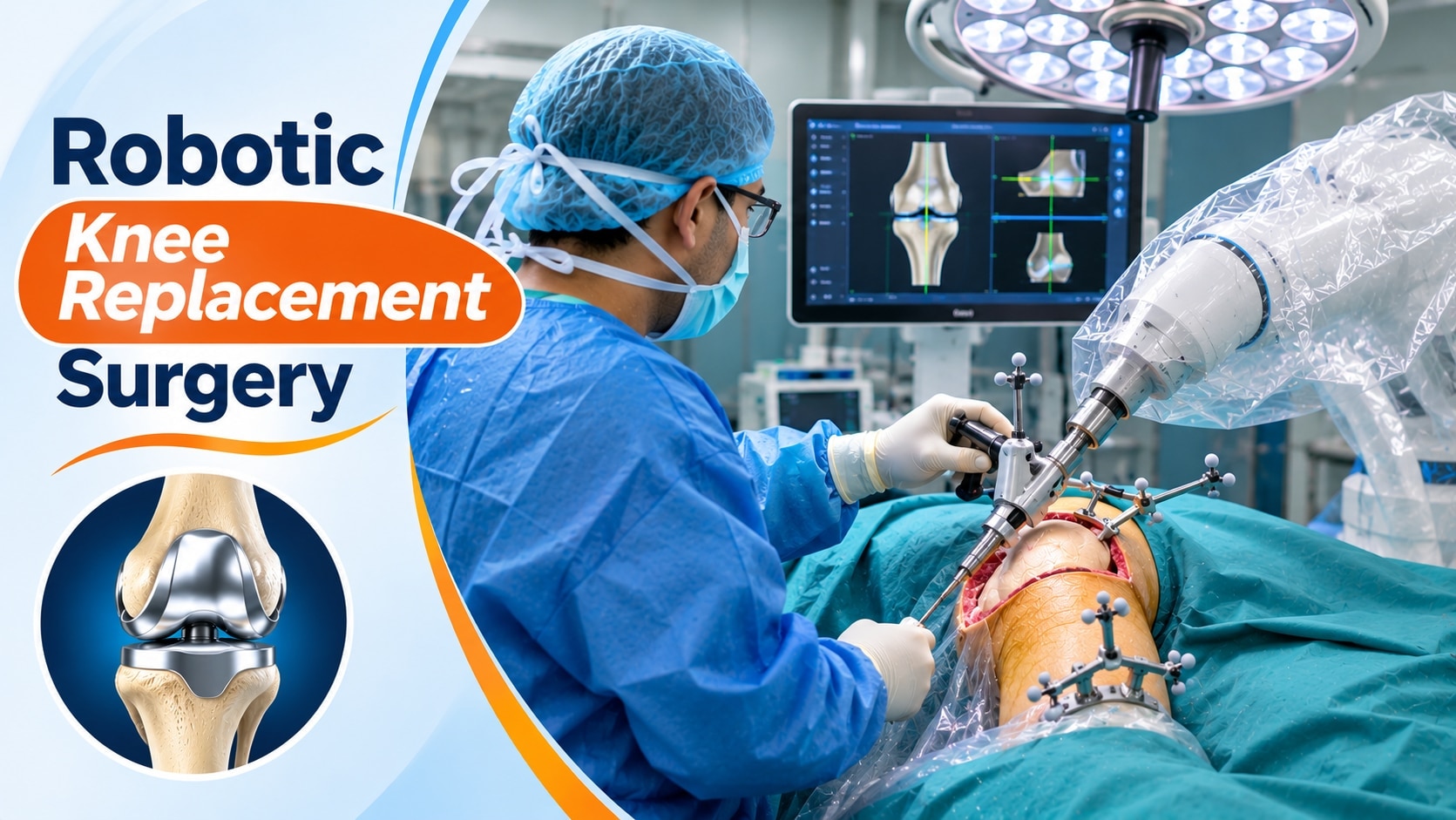

Severe arthritis on an X-ray does not automatically mean you need an operation. The decision depends on whether the joint is truly causing your symptoms, how much pain and disability persist after sensible treatment, and whether surgery is likely to improve your daily life enough to justify its risks.
Key takeaways
- Consider surgery when pain limits daily life despite appropriate non-surgical care.
- Confirm the damaged joint causes your symptoms, not an X-ray alone.
- Compare joint, implant, operation and recovery demands with your health goals.
- Separate surgical fitness from the likelihood that replacement will improve function.
When Pain and Lost Function Cross the Surgical Threshold
Discuss Joint Replacement Surgery when pain and lost function remain substantial after appropriate non-surgical care, and examination confirms that the damaged joint is causing the disability. An X-ray showing arthritis alone does not meet the threshold.
The decision becomes reasonable when symptoms repeatedly limit daily life:
- Pain disrupts sleep or remains difficult to control.
- Walking, stairs, work, or standing becomes restricted.
- Deformity, stiffness, or instability changes how you move.
- You need help with tasks you previously managed independently.
Conservative care still matters, but repeating a treatment with little benefit is not a requirement. A surgeon considers whether exercise-based rehabilitation or weight management improved function, how long relief lasted, and what side effects occurred. Persistent disability after a suitable trial carries more weight than the number of treatments attempted.
Knee Replacement is considered when knee disease and symptoms match, whether one or several compartments are involved. Hip Replacement is considered for advanced hip disease with matching pain and functional loss; pain referred from the back or nearby tissues must not be mistaken for hip damage.
The recommendation should match your goals. Expect less pain and better function, not a guaranteed normal joint: recovery is gradual, stiffness or discomfort can remain, and high-impact activity may be restricted. Your willingness to trade persistent symptoms for surgical risk and rehabilitation demands is part of crossing the threshold.
How the Diagnosis Is Confirmed Before Replacement
An X-ray showing arthritis does not prove that the joint causes your disability. A Joint Replacement Surgeon must match the image with your pain pattern, examination findings and loss of function before recommending Knee Replacement or Hip Replacement.
1. The surgeon records where pain starts, where it travels, and what triggers it, including walking, stairs, sitting, or sleep. Pain near the knee can come from hip arthritis, lumbar-spine disease, nerve compression, bursitis or tendon problems, so the history tests these alternatives.
2. The examination includes gait, hip and knee range of motion, tenderness, swelling, deformity, muscle strength, ligament stability and leg length. The surgeon also checks the spine and nerve function; weakness, altered sensation or back movement that reproduces pain may point away from the joint.
3. Imaging usually begins with standing, weight-bearing X-rays. Knee views assess joint-space loss, bone changes, alignment and each compartment; hip assessment commonly includes an anteroposterior pelvis view and a lateral hip view. Weight-bearing images reveal loading-related damage that a lying-down scan can miss.
4. MRI or CT is reserved for symptoms that the examination and X-rays do not explain, or for a specific question such as a meniscal, cartilage, bone or complex anatomical problem. Blood tests such as a complete blood count, ESR and CRP help investigate suspected infection or inflammatory arthritis.
The operation becomes more defensible when severe findings match persistent pain, restricted movement and difficulty walking or managing daily tasks. Mild imaging changes without matching disability call for another diagnosis or continued non-surgical care.
What Non-Surgical Treatment Still Contributes to the Decision
Non-surgical treatment contributes by showing whether you can regain useful function without an operation and whether the painful joint is truly responsible. Revisit structured physiotherapy, strengthening, activity modification, weight management when appropriate, a walking aid, topical or oral pain medicines, and selected injections.
Treat referred pain from the hip, lumbar spine, bursitis or nerve compression before considering Knee Replacement; replacing the knee will not correct those causes.
| Treatment | What it can show | When repeating is useful |
|---|---|---|
| Physiotherapy and strengthening | Whether weakness, stiffness or poor movement drives disability | Repeat when the programme was incomplete, poorly supervised or produced measurable improvement |
| Weight management and activity changes | Whether load reduction improves walking and pain | Revisit when weight or a harmful activity pattern is contributing |
| Walking aid or pain medicine | Whether support or symptom control restores daily function | Continue when benefit is meaningful and side effects are acceptable |
| Injection | How long temporary relief lasts and whether the joint is the pain source | Repeat only when prior relief was useful and risks have been discussed |
| Treatment for spine, hip or soft-tissue disease | Whether another condition explains the symptoms | Address it before replacement if examination points away from the knee |
Do not delay Joint Replacement Surgery simply to complete a longer checklist. For symptomatic moderate-to-severe osteoarthritis, the 2023 ACR/AAHKS guideline conditionally recommends against postponing elective hip or knee replacement solely to repeat physiotherapy, anti-inflammatory medication, ambulatory aids or injections after you have chosen surgery.
If these measures were properly tried, gave little or short-lived relief, and pain still limits sleep, walking or independence, repeating them adds delay rather than useful evidence.
Choosing the Right Operation for the Joint and the Person
A preserved knee compartment can support a partial Knee Replacement, but only when disease is confined to that compartment, the remaining cartilage is useful, alignment is suitable and the major ligaments remain stable. Disease across several compartments, substantial deformity or ligament failure usually points toward total Knee Replacement instead.
| Option | What the surgeon checks | When it applies |
|---|---|---|
| Partial Knee Replacement | One damaged compartment, correctable alignment and stable ligaments | Localised knee arthritis with matching pain and disability |
| Total Knee Replacement | Multiple damaged compartments, deformity, bone loss or unstable ligaments | Advanced knee disease affecting walking, stairs, sleep or independence |
| Hip Replacement | Advanced hip-joint damage, reduced movement and pain confirmed as coming from the hip | Severe hip arthritis or other destructive disease with functional limitation |
| Continued care | Symptoms, examination and imaging do not justify replacement, or another condition explains the pain | Manageable disability, treatable referred pain, or excessive current surgical risk |
Hip Replacement is not an alternative version of knee surgery: hip damage must be advanced and clearly responsible for the limitation. Pain near the knee can arise from the hip, lumbar spine, nerve compression or bursitis, so replacing the knee would miss the cause.
Age alone should not deny surgery. A Joint Replacement Surgeon weighs bone quality, frailty, heart or lung disease, diabetes control, infection risk, activity goals and recovery support; younger patients also face more lifetime implant wear or revision risk. Daily demands matter too: a physically demanding job may expose implant limitations that ordinary walking does not.
Medical Fitness Is Different From Likely Benefit
Being medically fit for Joint Replacement Surgery does not guarantee a worthwhile result. Before consent, a Joint Replacement Surgeon must match your symptoms and examination to the expected benefit, then weigh whether you can safely undergo surgery and complete recovery.
1. Review risk factors: heart or lung disease, diabetes control, anaemia, kidney disease, obesity, smoking, blood-thinning medicines, infection, frailty and previous anaesthetic problems. Age alone should not exclude surgery, but younger patients need to discuss possible implant wear and later revision.
2. Set measurable goals: less pain, better sleep, walking farther, managing stairs or returning to specific work. A replacement may leave stiffness or discomfort, and high-impact sport may be restricted. For Knee Replacement, discuss persistent pain, instability, infection, loosening and a knee that never feels completely normal.
For Hip Replacement, cover dislocation, leg-length inequality, fracture, infection, clots, nerve injury and later revision.
3. Plan recovery before booking: check strength, balance, cognition, walker use, transport, home stairs, bathroom access, caregiver availability and physiotherapy. Weak support calls for planned rehabilitation or discharge assistance, not an automatic refusal.
At Anand Ortho Care Centre- Dr. Ritesh Dang, a Delhi consultation can turn these questions into a written plan covering medical clearance, medication changes, home preparation, rehabilitation and warning signs. Proceed only when the expected improvement outweighs the risks and the trade-off suits your daily life.
Frequently asked questions
When does pain and lost function justify joint replacement surgery?
Surgery becomes a consideration when substantial pain and loss of function continue after appropriate non-surgical treatment, and examination confirms the damaged joint causes the disability. Arthritis visible on an X-ray alone does not meet that threshold.
How is the diagnosis confirmed before knee or hip replacement?
The surgeon combines your symptom history, physical examination and imaging. X-rays show joint damage, while the examination checks whether the affected joint reproduces your pain and explains your loss of function.
What non-surgical treatments are considered before joint replacement?
The decision accounts for treatments such as activity changes, physiotherapy, weight management when relevant, pain medicines and injections when appropriate. Their effect on pain, mobility and daily activities helps establish whether surgery is warranted.
How does a surgeon choose the right joint replacement operation?
The choice depends on the affected joint, the location and extent of damage, ligament and bone condition, age, activity goals, other health conditions and the expected recovery demands. Knee Replacement and Hip Replacement decisions require different surgical planning.
Is being medically fit enough for surgery the same as expecting good results?
No. Medical fitness addresses whether you can safely undergo anaesthesia and surgery. Likely benefit depends on whether the joint is the true source of disability and whether replacement is likely to improve your pain and function.
Keywords